
Concierge Medicine vs. Longevity Medicine
Concierge medicine and longevity medicine are often grouped together, but they serve different purposes.
Both offer more personalized care than traditional healthcare, but they differ in focus, structure, and long-term goals. Understanding the difference is important if you’re deciding which approach is right for you.
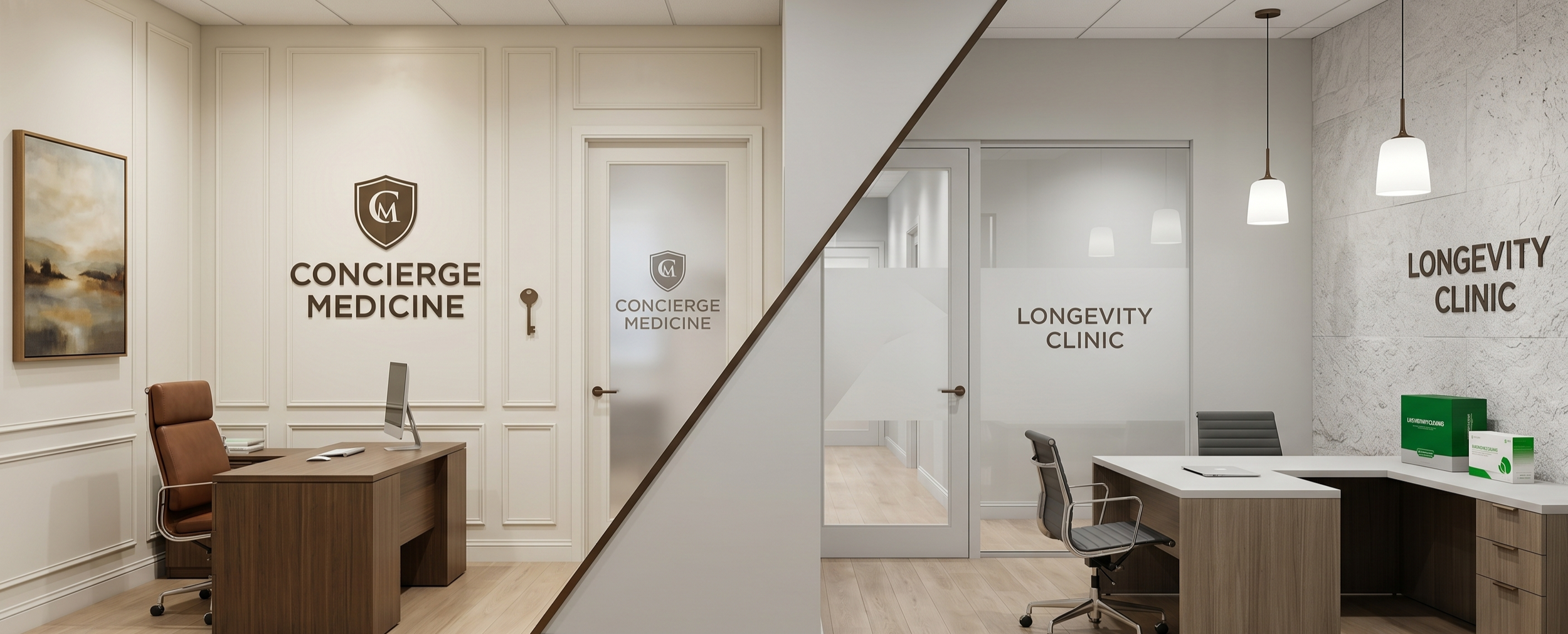
What Is Concierge Medicine?
Concierge medicine is a membership-based model that provides patients with direct access to a primary care physician.
In this model, patients typically pay an annual fee in exchange for:
Longer appointments
Same-day or next-day access
More personalized attention
A closer physician relationship
The focus is still largely on primary care, but delivered at a higher level of access and convenience.
What Is Longevity Medicine?
Longevity medicine is focused on preventing disease and optimizing long-term health outcomes.
It goes beyond traditional primary care by using:
Advanced diagnostics and biomarker analysis
Performance testing (VO₂ max, DEXA, metabolic markers)
Continuous monitoring and data-driven decision-making
The goal is not just to treat illness or provide access, but to identify risk early and improve healthspan over time.
Key Differences
The difference between the two models comes down to focus.
Concierge medicine improves the experience of care.
Longevity medicine changes the approach to care.
Here’s how they compare:
Concierge Medicine
Focuses on access and convenience
Primary care model
Standard lab testing
Episodic visits
Physician relationship
Longevity Medicine
Focuses on prevention and optimization
Data-driven, systems-based care
Advanced diagnostics and biomarkers
Continuous, longitudinal care
Integrated care team (physician + specialists)
There is some overlap between the two models.
Both:
Offer personalized care
Typically operate on a membership basis
Provide more time and attention than traditional healthcare
Because of this, some practices combine elements of both.
The Bigger Shift in Healthcare
Traditional healthcare is designed to treat disease.
Concierge medicine improves how that care is delivered.
Longevity medicine changes what the care is designed to do.
As more people look for ways to improve long-term health outcomes, the shift toward prevention, diagnostics, and continuous care is accelerating.
A Combined Approach: Concierge + Longevity Medicine
In practice, the most effective model often combines elements of both concierge medicine and longevity medicine.
Concierge medicine improves access, responsiveness, and the physician relationship. Longevity medicine adds advanced diagnostics, data-driven decision-making, and a focus on long-term outcomes.
When combined, this approach allows for:
Dedicated physician access with ongoing support
Advanced testing and continuous monitoring
Personalized care plans that evolve over time
Integration across clinical care, nutrition, exercise, and recovery
This model shifts healthcare from both reactive and fragmented to coordinated, proactive, and personalized.