
What Is Medicine 3.0? The Future of Preventive Healthcare
Healthcare is undergoing a major transformation.
For decades, most medical care has focused on diagnosing and treating disease after symptoms appear. While this approach has saved countless lives and remains essential for acute care, many of today's most common health challenges develop silently for years before symptoms become obvious.
This reality has led to growing interest in a new approach known as
Medicine 3.0.
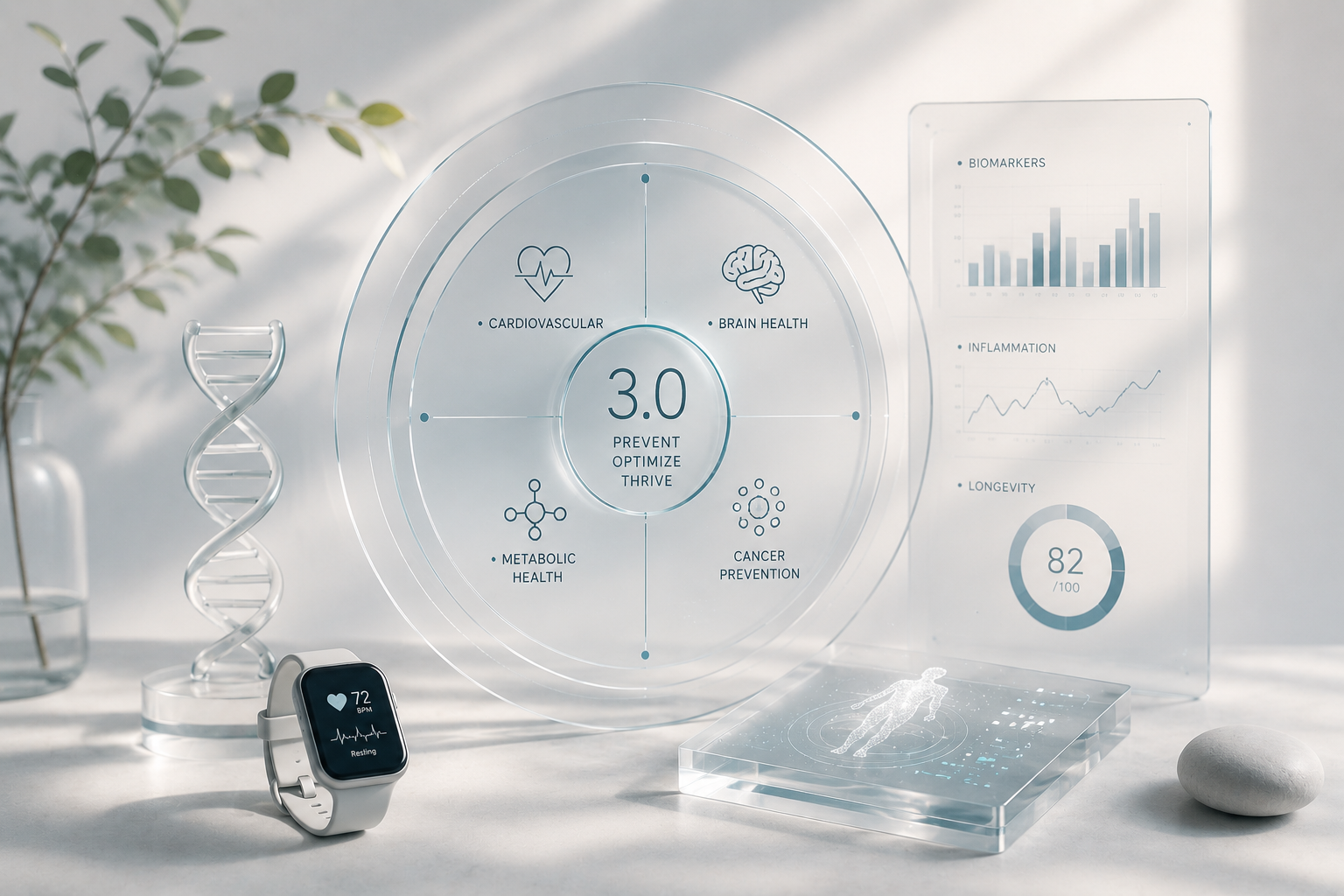
Rather than waiting for disease to develop, Medicine 3.0 focuses on identifying risk earlier, preventing chronic illness, and helping individuals maintain health, performance, and quality of life for as long as possible.
Popularized by physician and longevity expert Dr. Peter Attia, Medicine 3.0 represents a shift from reactive healthcare toward proactive, personalized, and prevention-focused medicine.
At Longevity Health, many of the principles that guide our approach to preventive care and longevity medicine are closely aligned with the Medicine 3.0 philosophy.
This guide explains what Medicine 3.0 is, how it differs from traditional healthcare, and why it is becoming increasingly important for individuals who want to optimize both lifespan and healthspan.
What Is Medicine 3.0?
Medicine 3.0 is a healthcare philosophy focused on preventing disease before it develops and optimizing health long before symptoms appear.
Traditional medicine often intervenes after a problem becomes apparent. Medicine 3.0 aims to identify risks earlier and create personalized strategies to reduce those risks over time.
This approach emphasizes:
Prevention over reaction
Long-term health optimization
Personalized care plans
Advanced diagnostics
Continuous monitoring
Lifestyle and behavioral interventions
Data-driven decision making
The goal is not simply to help people live longer.
The goal is to help people maintain strength, cognitive function, mobility, independence, and quality of life throughout the aging process.
Medicine 1.0 vs. Medicine 2.0 vs. Medicine 3.0
Understanding Medicine 3.0 becomes easier when viewed in the context of how healthcare has evolved.
Medicine 1.0
Medicine 1.0 represents the earliest stages of medicine, when treatments were largely based on observation and limited scientific understanding.
While important for its time, outcomes were often unpredictable and many diseases were poorly understood.
Medicine 2.0
Medicine 2.0 refers to modern evidence-based medicine.
This model has produced remarkable advances in:
Surgery
Emergency medicine
Antibiotics
Vaccines
Disease treatment
However, Medicine 2.0 is often focused on diagnosing and treating disease after it develops.
While highly effective in many situations, it may not always address the root causes of chronic illness before significant damage occurs.
Medicine 3.0
Medicine 3.0 builds on the successes of modern medicine while shifting greater attention toward prevention, early detection, and long-term optimization.
Instead of asking:
"How do we treat disease?"
Medicine 3.0 asks:
"How do we prevent disease from developing in the first place?"
The Four Major Threats to Long-Term Health
Many Medicine 3.0 practitioners focus heavily on four major categories of chronic disease that account for a significant portion of age-related illness and mortality.
Cardiovascular Disease
Heart disease remains one of the leading causes of death worldwide.
Medicine 3.0 emphasizes earlier identification of cardiovascular risk factors through advanced testing, imaging, and lifestyle interventions.
This may include:
ApoB testing
Lipoprotein(a)
Coronary artery calcium scoring
Advanced cardiovascular imaging
VO2 max testing
Blood pressure monitoring
Cancer
Many forms of cancer are more treatable when detected early.
Medicine 3.0 emphasizes appropriate screening strategies based on age, family history, and risk factors.
Depending on the individual, this may include:
Standard cancer screenings
Advanced imaging
Genetic risk assessment
Lifestyle modifications
Neurodegenerative Disease
Conditions such as Alzheimer's disease and other forms of cognitive decline often develop over decades.
Medicine 3.0 focuses on preserving brain health through:
Sleep optimization
Exercise
Metabolic health
Cardiovascular health
Stress management
Cognitive resilience strategies
Metabolic Disease
Metabolic dysfunction is one of the largest drivers of chronic disease.
Insulin resistance, obesity, diabetes, and metabolic syndrome are closely connected to cardiovascular disease, cognitive decline, and reduced quality of life.
Medicine 3.0 places strong emphasis on:
Glucose regulation
Body composition
Nutrition
Exercise
Sleep
Metabolic flexibility
Why Prevention Matters
Many chronic diseases begin years before symptoms appear.
A person may feel healthy while still developing:
Insulin resistance
Elevated cardiovascular risk
Hormonal changes
Inflammation
Poor recovery patterns
By the time symptoms develop, significant disease progression may have already occurred.
Medicine 3.0 focuses on identifying these trends earlier, creating opportunities for intervention before major problems emerge.
This approach can help individuals maintain better health, energy, and performance throughout life.
What Testing Is Used in Medicine 3.0?
Medicine 3.0 relies heavily on data.
Rather than guessing, physicians use objective measurements to better understand how the body is functioning.
Testing may include:
Comprehensive blood testing
Advanced cardiovascular biomarkers
Hormone analysis
Body composition testing
VO2 max assessment
Continuous glucose monitoring
Coronary artery calcium scoring
Advanced cardiac imaging
Sleep and recovery tracking
Genetic testing when appropriate
These insights help create highly personalized recommendations based on an individual's goals, risk factors, and physiology.
Who Should Consider a Medicine 3.0 Approach?
Medicine 3.0 is not only for older adults.
Many individuals begin adopting a preventive strategy in their 30s, 40s, and 50s to improve long-term outcomes.
This approach may be particularly valuable for:
Busy professionals
Executives and entrepreneurs
Frequent travelers
Individuals with family histories of chronic disease
High performers
Patients interested in healthy aging
Individuals seeking a more proactive healthcare experience
The earlier risk factors are identified, the more opportunities there may be to improve long-term health outcomes.
The Future of Healthcare
Healthcare is increasingly moving toward prediction, prevention, and personalization.
Patients no longer want to wait for disease before taking action.
They want to understand:
How to improve energy
How to optimize performance
How to reduce future risk
How to maintain independence
How to stay healthy for longer
Medicine 3.0 provides a framework for answering those questions.
By combining advanced diagnostics, evidence-based medicine, lifestyle optimization, and continuous monitoring, this approach represents a meaningful shift toward a more proactive future of healthcare.
Medicine 3.0 is not about chasing perfection or trying to avoid aging altogether.
It is about taking a proactive approach to health by identifying risks earlier, making informed decisions, and building sustainable habits that support long-term wellness.
The goal is not simply to add years to life.
The goal is to add life to those years.
As healthcare continues to evolve, Medicine 3.0 is helping more individuals move beyond reactive disease management and toward a more personalized strategy focused on prevention, performance, and healthy aging.
Ready to Take a More Proactive Approach to Your Health?
At Longevity Health, we help patients implement many of the core principles of Medicine 3.0 through advanced diagnostics, physician-guided care, personalized health strategies, and ongoing preventive monitoring.
If you're interested in optimizing your health, reducing future disease risk, and building a long-term plan for healthy aging, schedule a free Longevity Session to learn how our personalized longevity programs can help support your goals.